There is a part of Umbria that mass tourism has not yet fully discovered. It lies south of Perugia, at the foot of the Martani Mountains, in a land where history follows the ancient route of the Via Flaminia, hilltop villages cling to the slopes, and nature remains the authentic expression of an Italy that still moves at its own pace. Massa Martana and its surroundings are one of those places you discover almost by chance and then never want to leave behind. For couples searching for a wedding venue away from the usual destinations, this corner of Umbria offers something few places can match: two extraordinary venues, each with its own unique character, both capable of turning a special day into a lifelong memory.
The Area: Massa Martana and the Martani Hills
A Medieval Village Between History and Nature
Massa Martana successfully reinvented itself after the 1997 earthquake. Following its inclusion among Italy's Most Beautiful Villages, it began attracting travelers looking for authentic experiences. Its historic center, enclosed within medieval walls, is home to Romanesque churches, 16th-century palaces, and layers of history stretching from Roman times through the Middle Ages. Along the ancient Via Flaminia—the Roman road that connected Rome to the Adriatic coast—you'll find abbeys, parish churches, and historic places of worship that tell over two thousand years of civilization.
The Martani Hills: The Perfect Setting
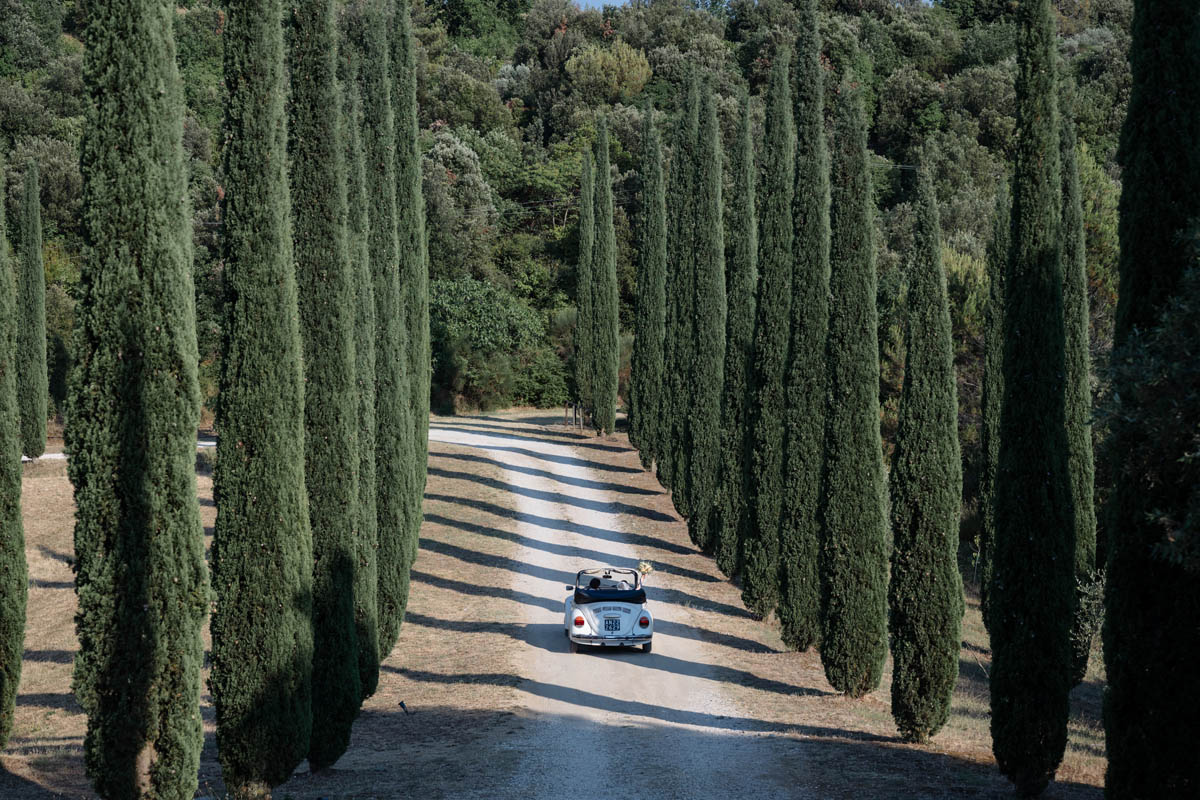
The Martani Mountains surrounding Massa Martana offer landscapes that are both gentle and wild: holm oak forests, centuries-old olive groves, scenic hiking trails, and a silence that feels almost tangible. The area's extra virgin olive oil, "Colli Martani," is protected by the DOP designation, while "Colli Martani" wines carry the DOC label—products of a land that has always celebrated outstanding food and wine traditions. Nearby are some of Umbria's most remarkable destinations: Todi, with its magnificent Temple of Consolation and medieval Piazza del Popolo, together with Spoleto, Orvieto, and Assisi, all less than an hour away. It's the perfect base for wedding guests who want to turn the celebration into a journey through the most authentic side of Umbria.
Castello di Montignano: A Thousand Years of History in the Service of Love
The Castle's Origins
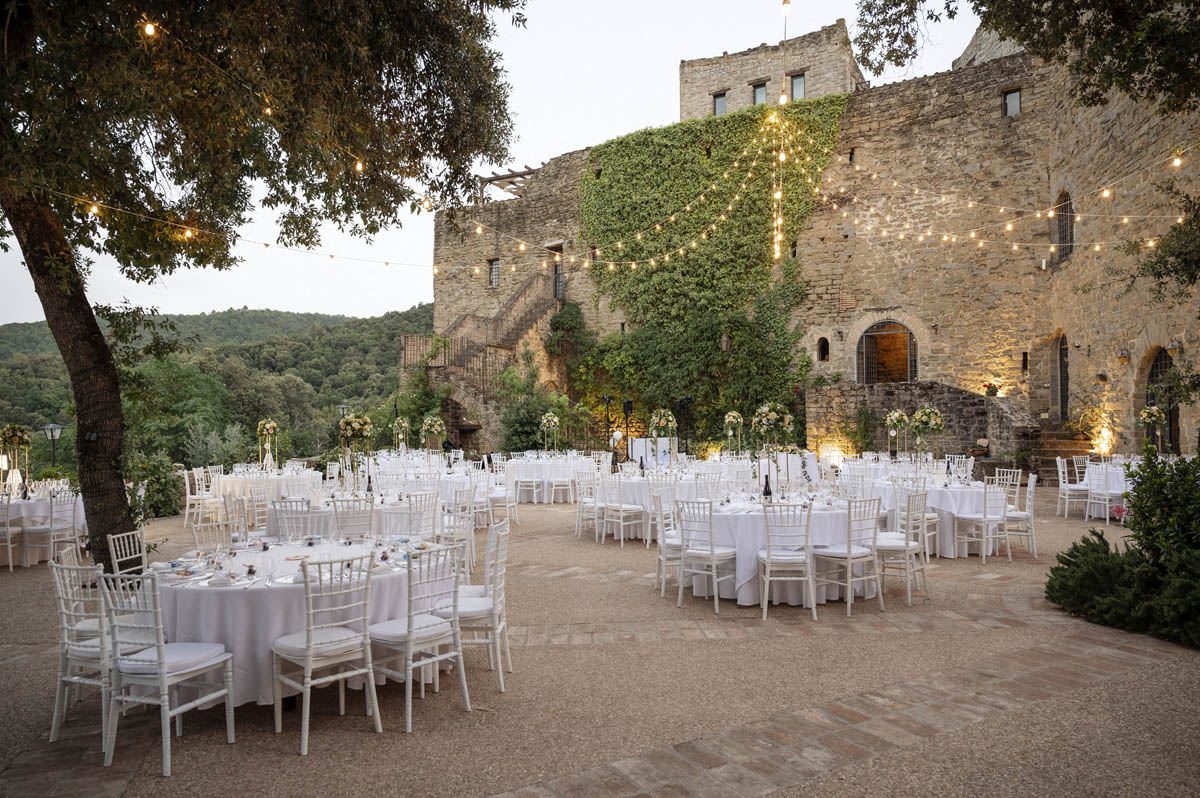
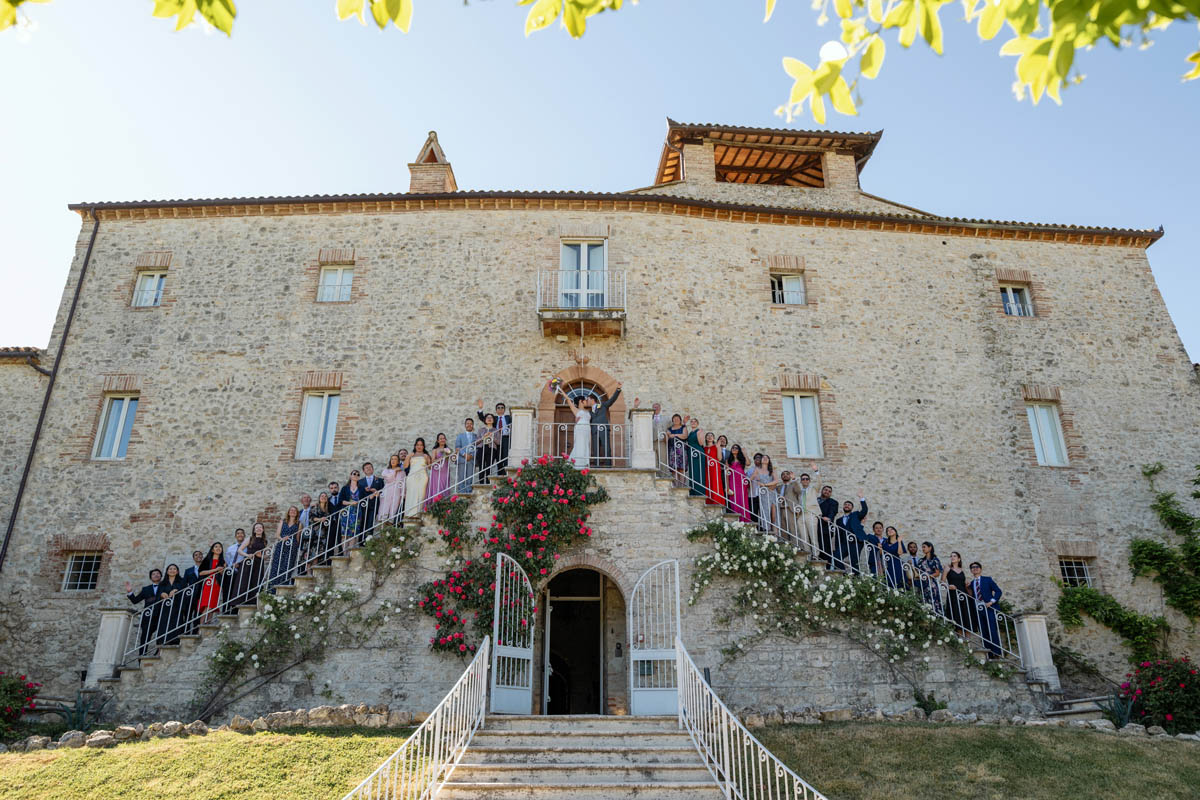
The origins of Castello di Montignano date back to 962 AD, when Otto II of Saxony granted the county to Count Arnolfo as a loyal nobleman. Carefully restored in 2009, it is one of the very few private properties in Umbria where the Mayor is authorized to perform legally binding civil wedding ceremonies. The result is a rare combination: one thousand years of history seamlessly blended with refined contemporary design, while preserving the castle's authentic medieval character. Twelve elegant suites, a panoramic swimming pool, and a wellness center are all enclosed within the ancient castle walls.
Wedding Spaces
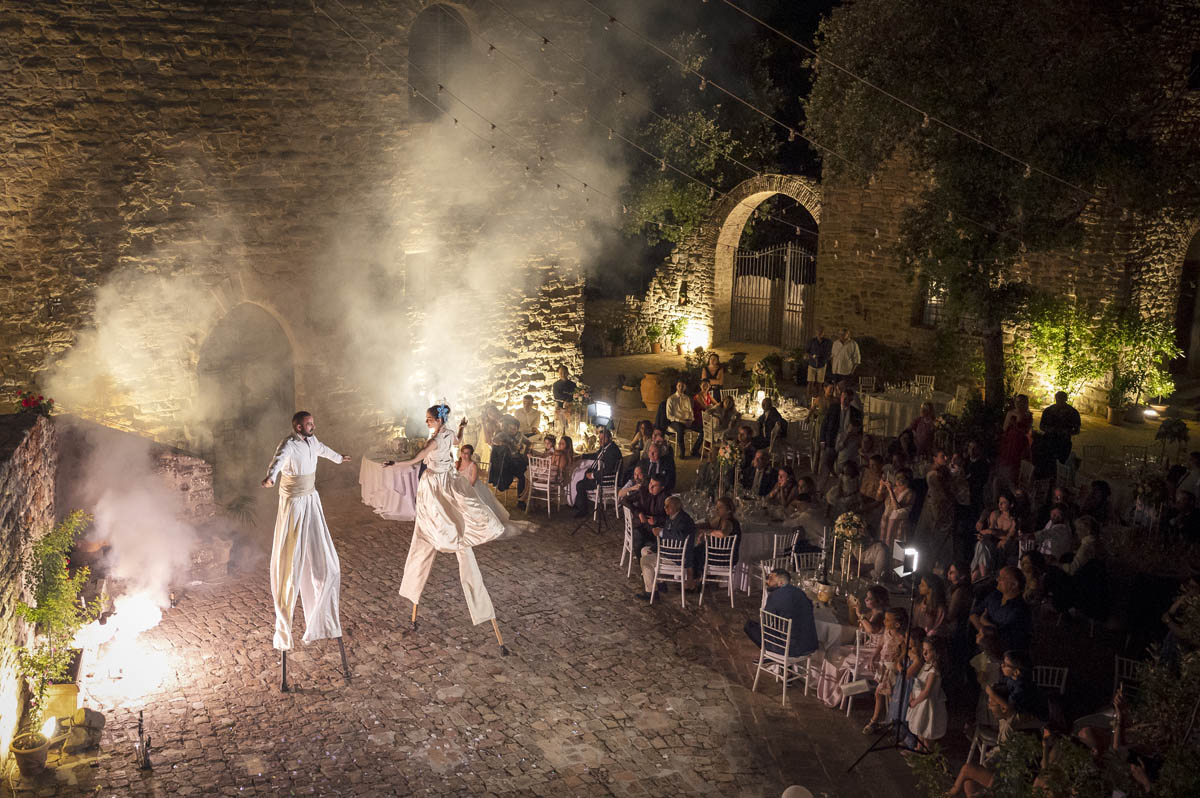
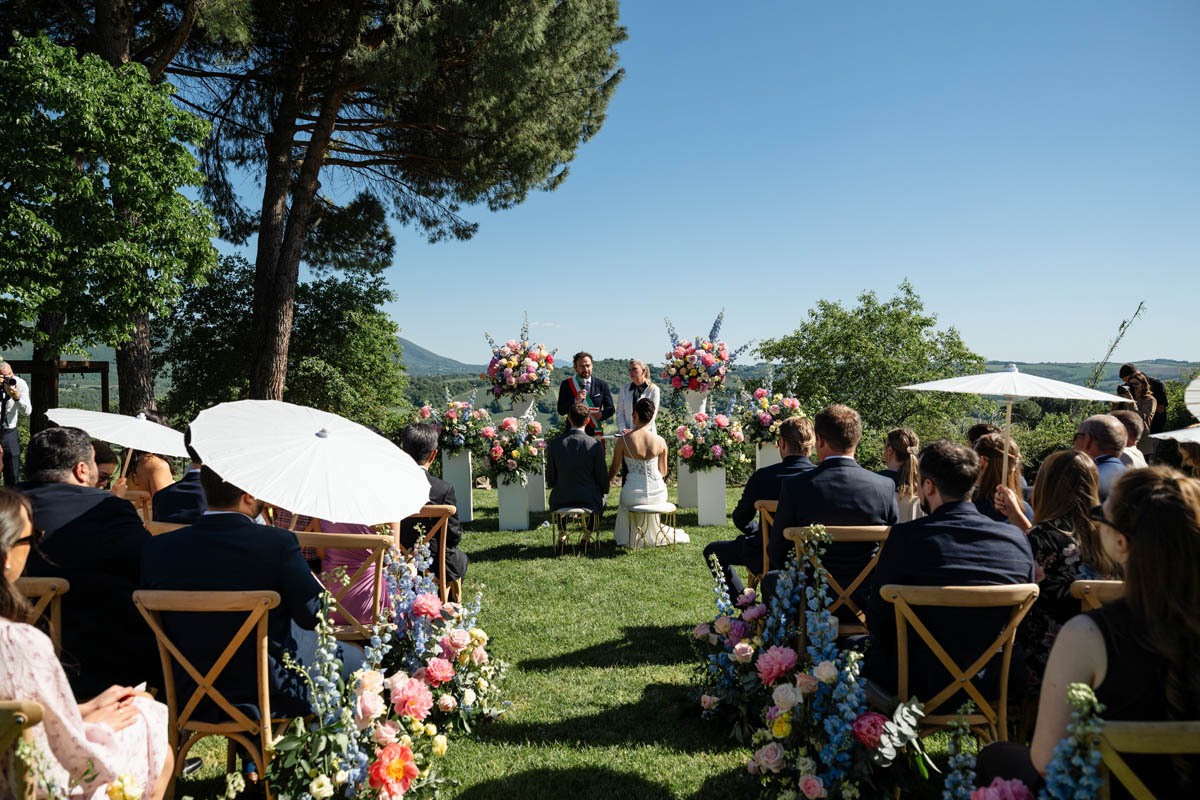
The castle offers a remarkable variety of spaces, each with its own distinct atmosphere. The "Stone Halls" on the ground floor feature ancient stone arches and vaulted ceilings, while the "Fireplace Hall" is centered around a magnificent medieval fireplace. The "Imperial Hall" occupies the fourth floor, while the "Olive Pavilion" sits within the park among olive trees, overlooking the swimming pool and offering breathtaking 360-degree views across the Martani Hills. Then there is the "Horthus," an Italian-style garden enclosed by ancient walls and filled with roses, hydrangeas, and lavender. Completing the experience is the Medieval Village of Montignano, one of Italy's smallest villages with only twelve residents, providing an extraordinary cinematic backdrop for wedding photography.
Church of San Giovanni Evangelista
For couples dreaming of a religious ceremony, the consecrated Church of San Giovanni Evangelista is located within the medieval village itself. It accommodates up to 90 seated guests, with room for an additional 30 attendees who can follow the ceremony from outside through the open doors. The atmosphere is intimate and deeply spiritual, where ancient stone becomes the only decoration needed.
San Pietro Sopra le Acque: A 17th-Century Monastery That Feels Timeless
The Story Behind the Venue
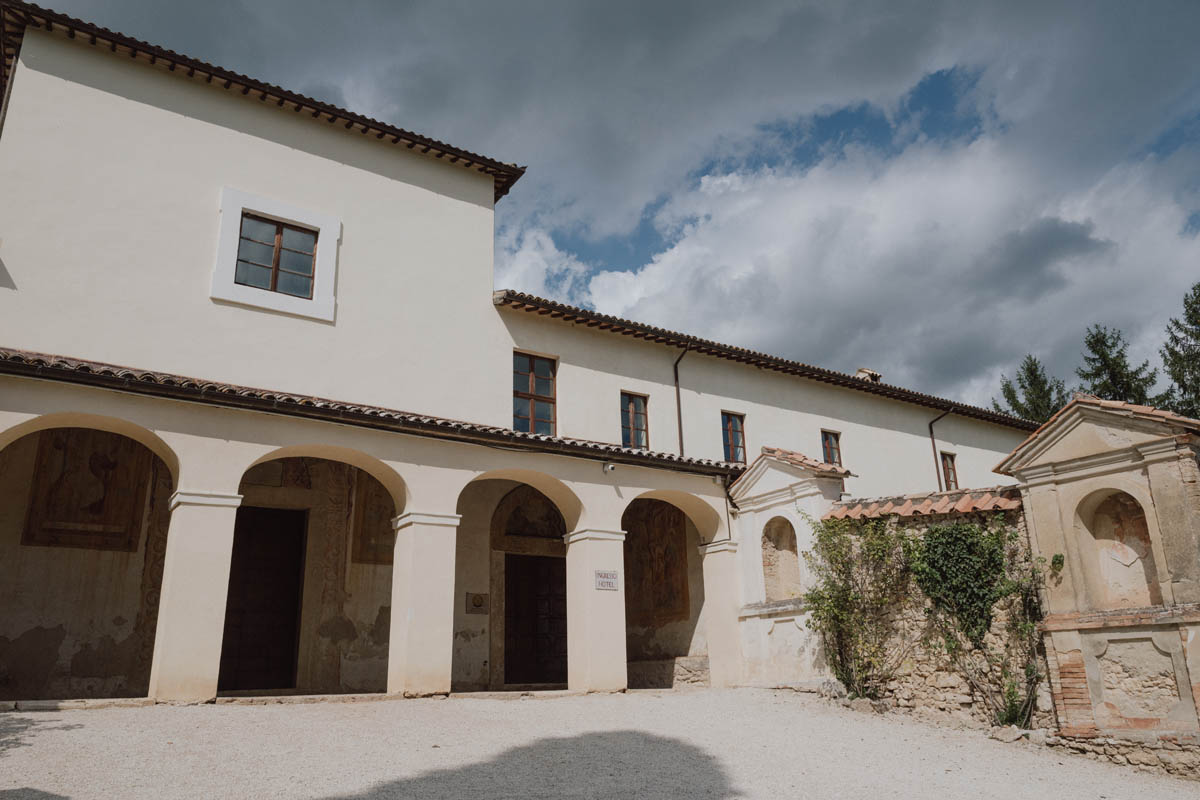
Residenza San Pietro Sopra le Acque was created from a former 17th-century Capuchin monastery. Located in Massa Martana, just a short drive from Todi, the property owes its name to the natural springs that have characterized this part of Umbria since ancient times. During the 1600s it served as a Capuchin convent, and today it still preserves its consecrated church along with valuable artistic treasures, including original frescoes and 17th-century paintings that decorate the shared spaces.
An Immersive Wedding Experience
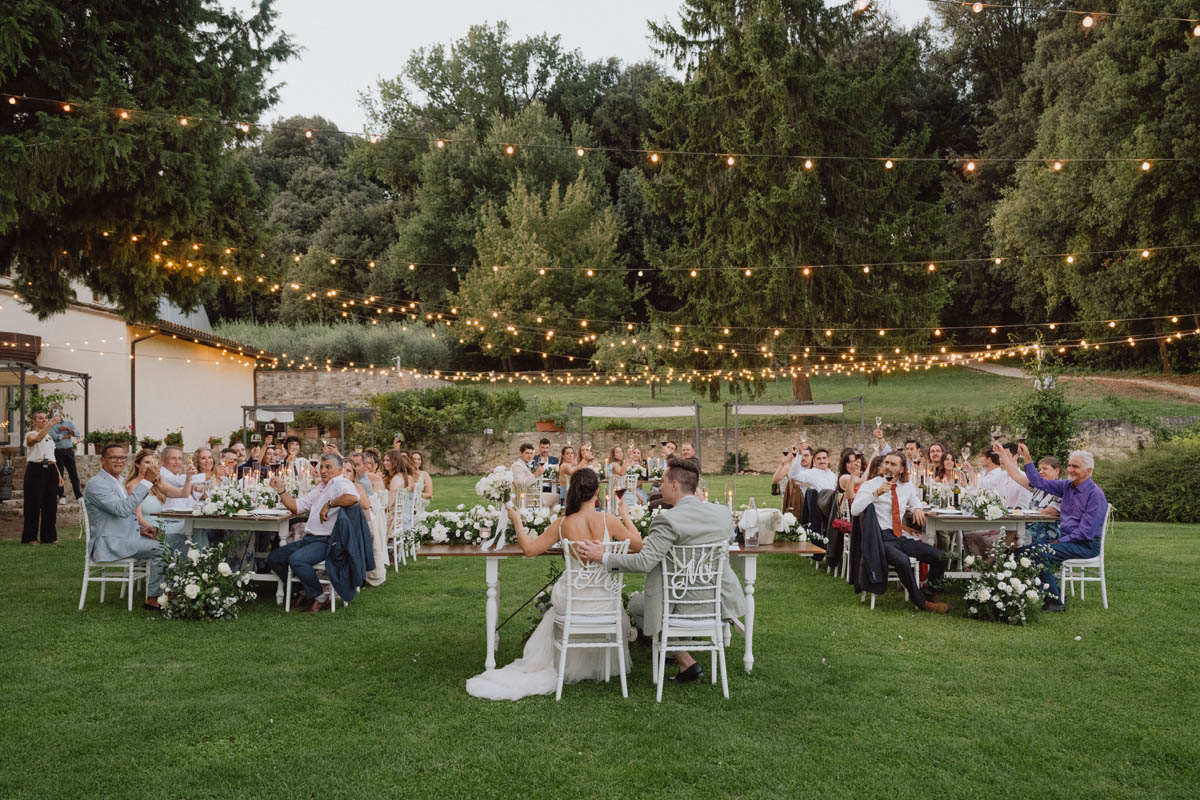
San Pietro Sopra le Acque is designed for couples who want to experience their wedding as a complete retreat—without transfers, without stress. From the Italian-style garden with its swimming pool during the warmer months, to the beautifully frescoed 17th-century halls, and the exclusive rose garden dedicated to civil ceremonies, every space tells a different story. The venue can host up to 200 seated guests, guarantees exclusive use for the entire day (only one wedding is held each day), and offers elegant accommodation for guests wishing to stay overnight. There is even the "Path of Promises" and the ancient woodland, providing unique settings for unforgettable wedding photographs.
The Consecrated Church
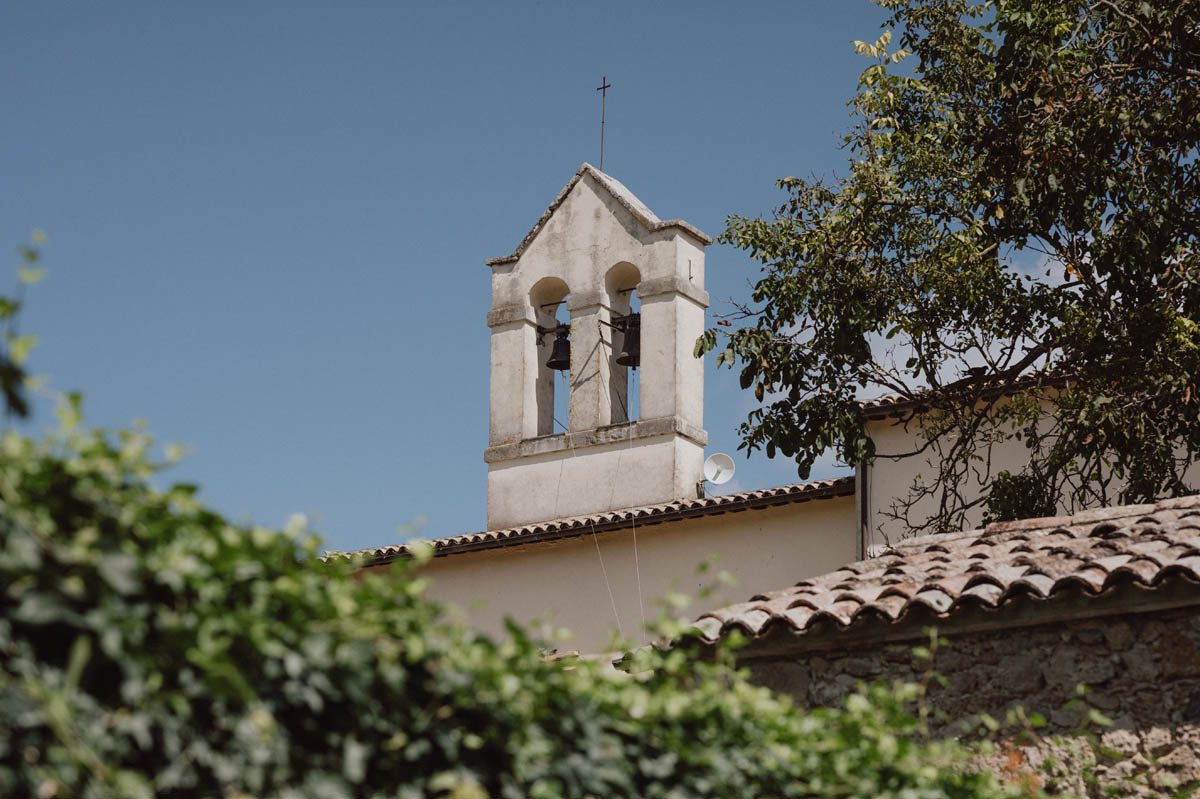
The former Franciscan monastery's beautiful consecrated church, built in late Mannerist style and preserving its original paintings, frescoes, floors, and stucco decorations, is one of the most enchanting places to exchange vows in the entire Province of Perugia. It isn't a venue created for weddings—it is a place that has existed for more than four centuries, carrying with it the quiet weight of history.
Two Different Souls, One Beautiful Choice
Castello di Montignano and San Pietro Sopra le Acque are two complementary wedding venues. Both are exceptional, yet each offers a completely different atmosphere. The Castle is dramatic, vertical, and unmistakably medieval—perfect for couples dreaming of a fairytale wedding, surrounded by centuries-old stone walls and timeless architecture. San Pietro, on the other hand, offers a softer, more contemplative setting inspired by its monastic heritage, embraced by the peaceful Umbrian countryside and the scent of ancient woodlands. It is the ideal choice for couples seeking an intimate celebration where time seems to stand still. In both cases, the beauty of Massa Martana becomes more than just a backdrop—it becomes part of the couple's story.
Would you like more information about your wedding in Umbria, surrounded by the stunning Martani Mountains?
Get in touch today!
Si può celebrare il matrimonio civile sia al Castello di Montignano che a San Pietro Sopra le Acque?
Sì, entrambe le strutture hanno l'elezione a casa comunale e possono ospitare riti civili con valore legale direttamente in location.
Ci sono chiese consacrate in queste location?
Sì, entrambe le strutture dispongono di una chiesa consacrata al loro interno: la chiesa di San Giovanni Evangelista al Castello di Montignano e l'antica chiesa del convento cappuccino a San Pietro Sopra le Acque.
Cosa possono fare gli ospiti nei giorni intorno al matrimonio?
La zona di Massa Martana offre trekking sui Colli Martani, terme di Sanfaustino, visite a Todi, Spoleto e Orvieto, degustazioni di olio DOP e vino DOC locali, e tour tra i borghi medievali del territorio.